A Happy Society
2018
sous la direction de Fionn Byrne
Extrait du travail publié dans l’article The Ethics of Form: Designing New Landscape Histories through an Alternative Pedagogy
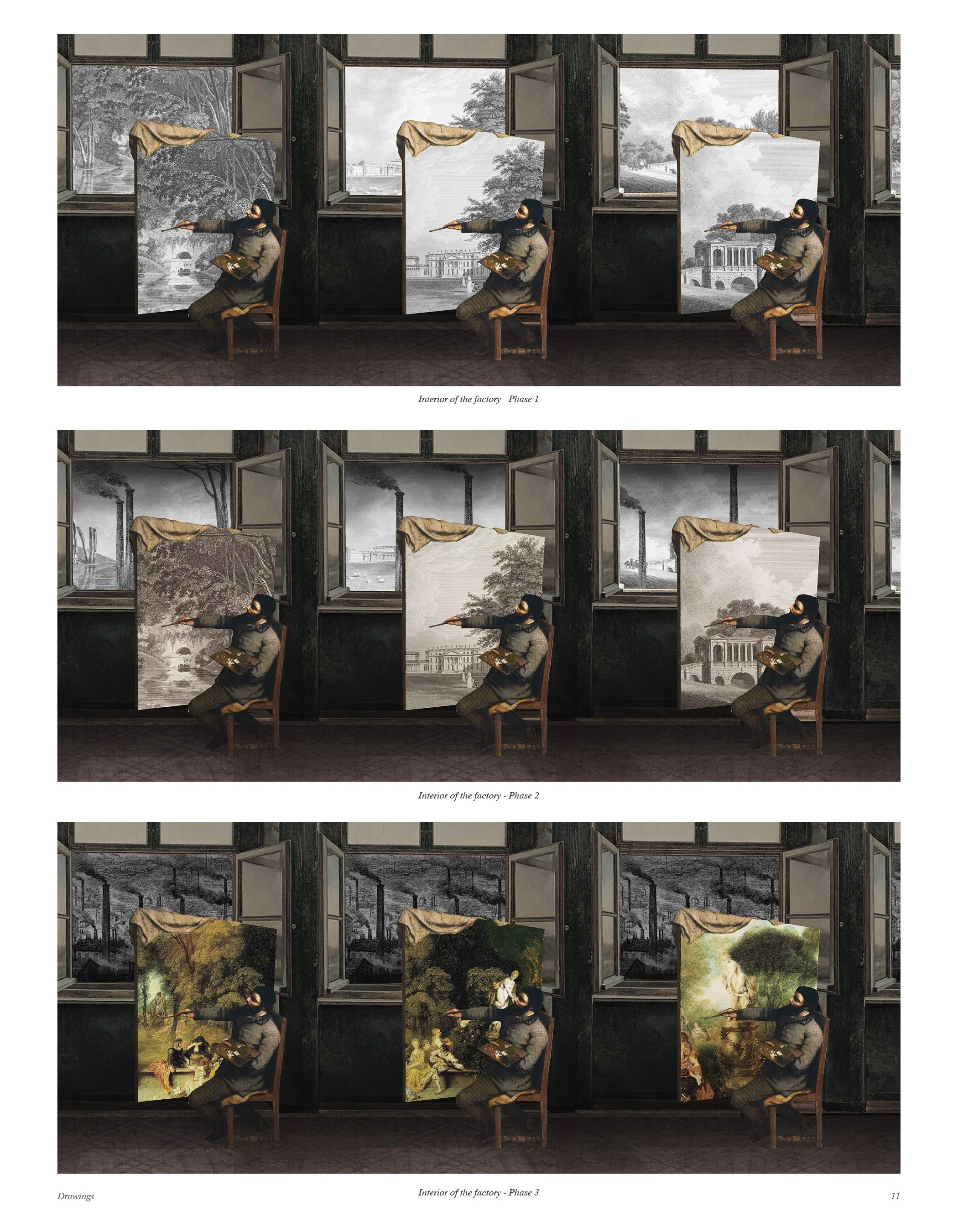
A Representation of the separation between a reality and its representation
Architecture might be the one thing that should not strive for progress. It should be thought of as a way to define the present. Architecture is not a problem solver, but it exists as a representation of what we are, what we could have been. To comprehend how to deal with the present, the past has to be constantly revisited, rewritten. It is through the representation of our past that we grasp our present, and if so, our future. A redefinition of the past will change the assumptions we have about the future.
In the 18th century, just as today, leisure is largely influenced by the production and consumption of images. While the content and medium of the image has changed, Edenic scenes and the pursuit of perfect gardens, remain closely associated with landscapes of leisure. This project imagines an architecture that functions to bring into existence an immersive reality of an ideal garden. While the garden is perfect in its execution, this project explores the implications for the physical world of alienating a population from connections to a physical place. This work tells a story set in the past but casts a warning for our future, a warning for pure progress.
Alexander Pope is said to have famously remarked in 1734: “All gardening is landscape-painting. Just like a landscape hung up.” With this succinct passage he argued there was no difference between landscape painting and landscape gardening, or what would later be called landscape architecture. At the time painting was more fashionable than gardening, so Pope was promoting the work of those transforming the physical landscape of Britain. Today the relationship has changed, as we give priority to the physical experience of landscapes instead of the virtual experience through painting. But we can use Pope to argue for a reversal as the passage implies no difference between image and reality.
The Helmet
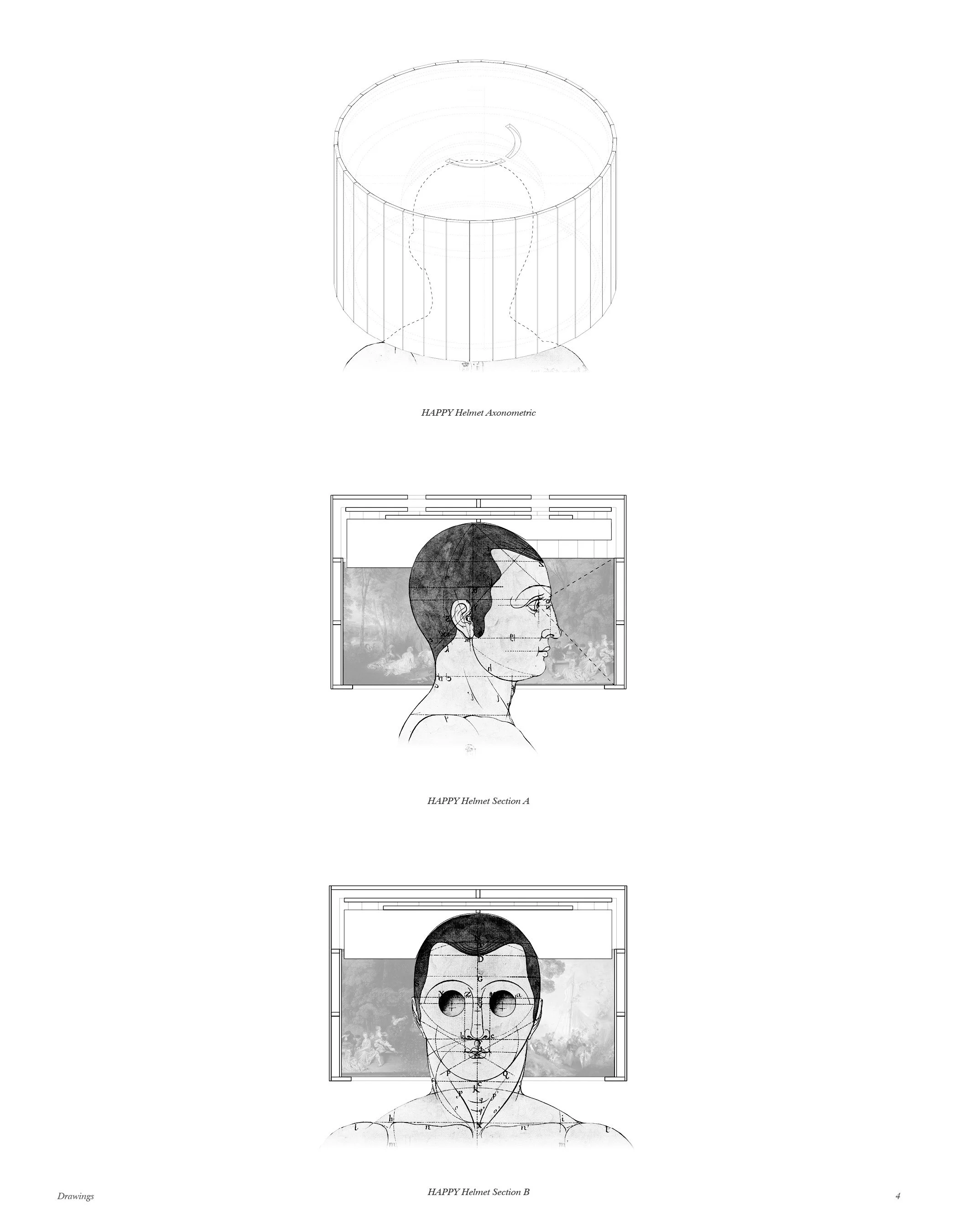
This being so, this project explores what a personal device for creating virtual landscapes would have looked like in Pope’s time. Crafted from wood, a lightweight helmet sits on your head and immerses your sight in a 360 panoramic painting of any garden. It is lit by natural light entering from a slit above your eyes, your only connection to the outside world.
The Building
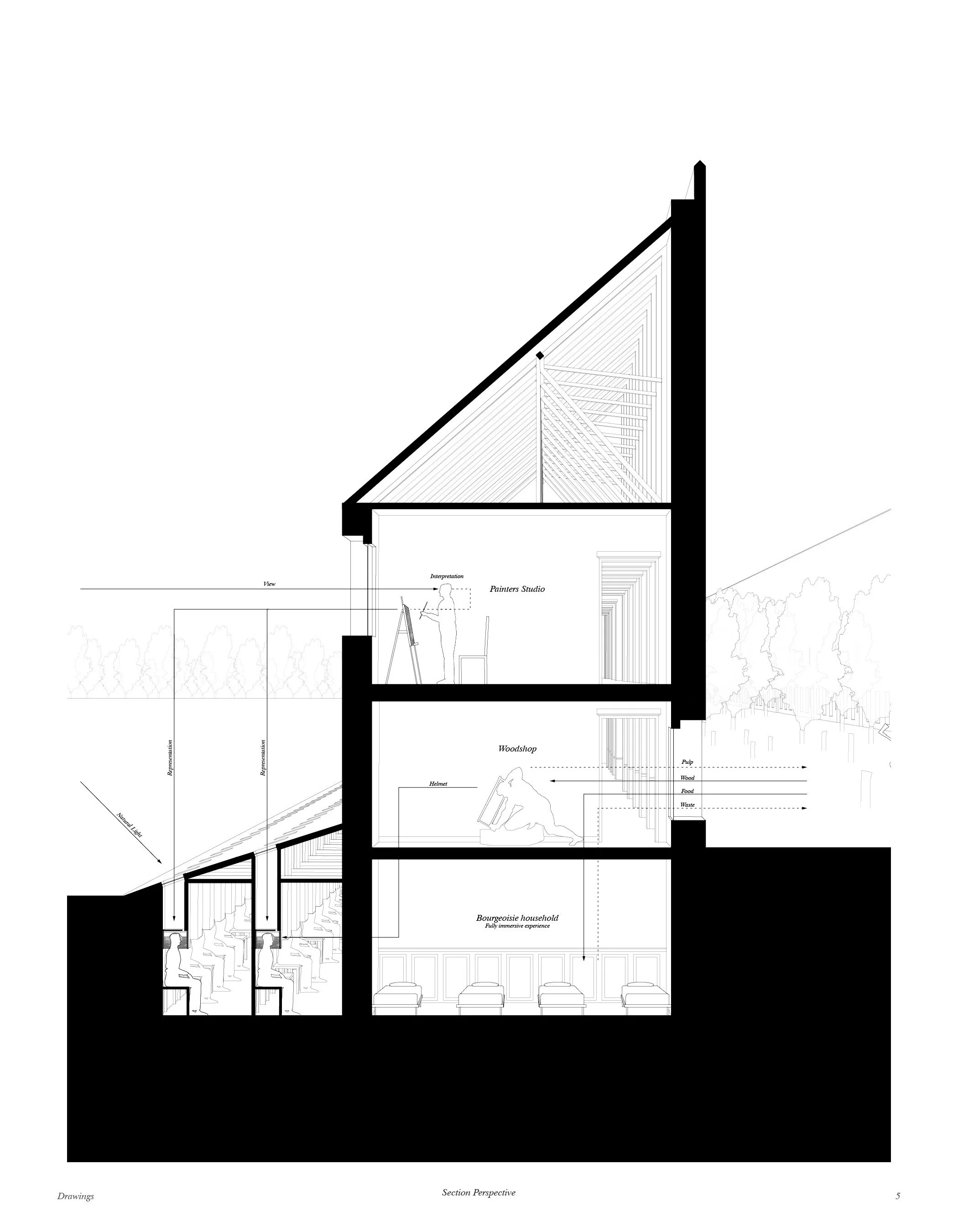
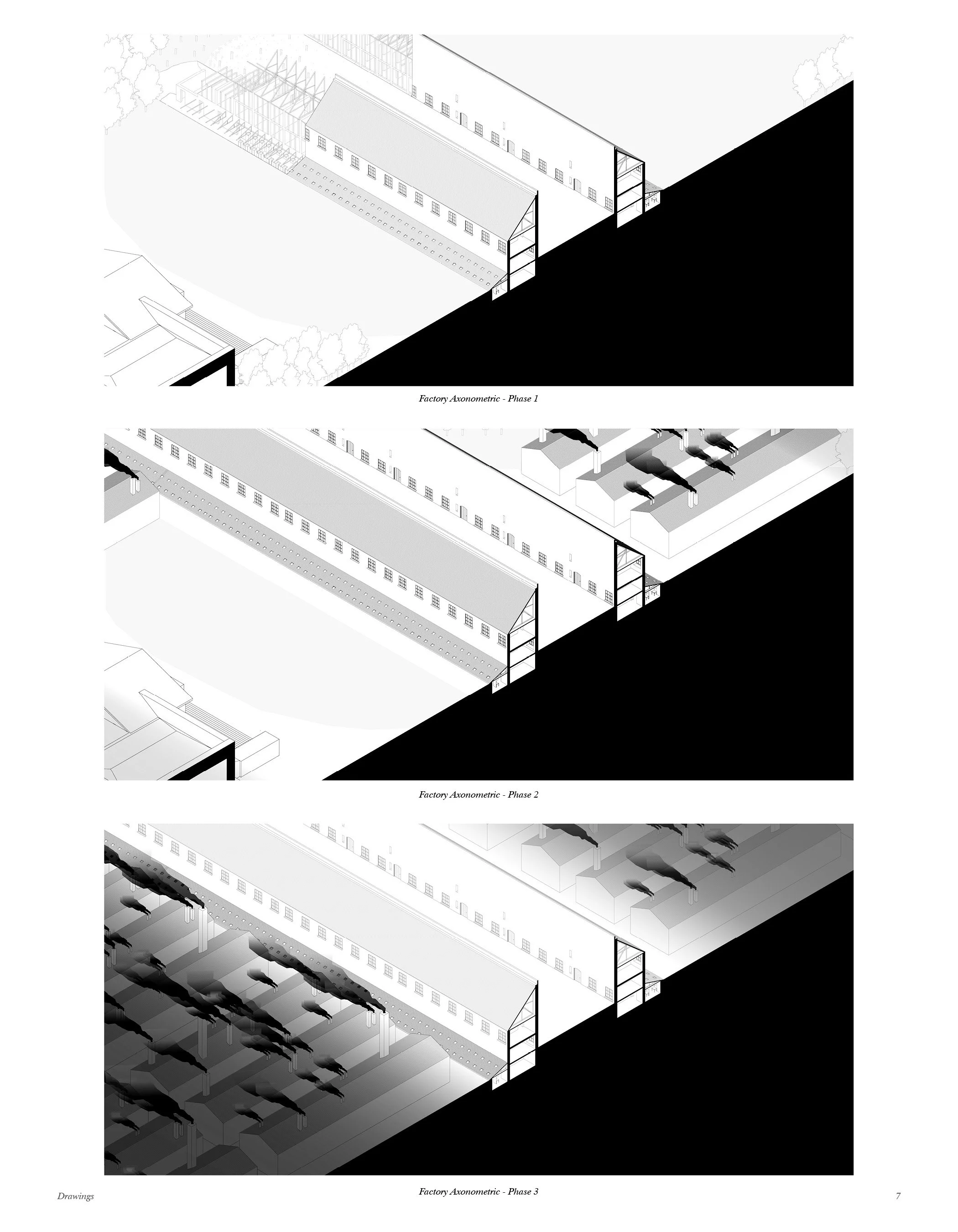
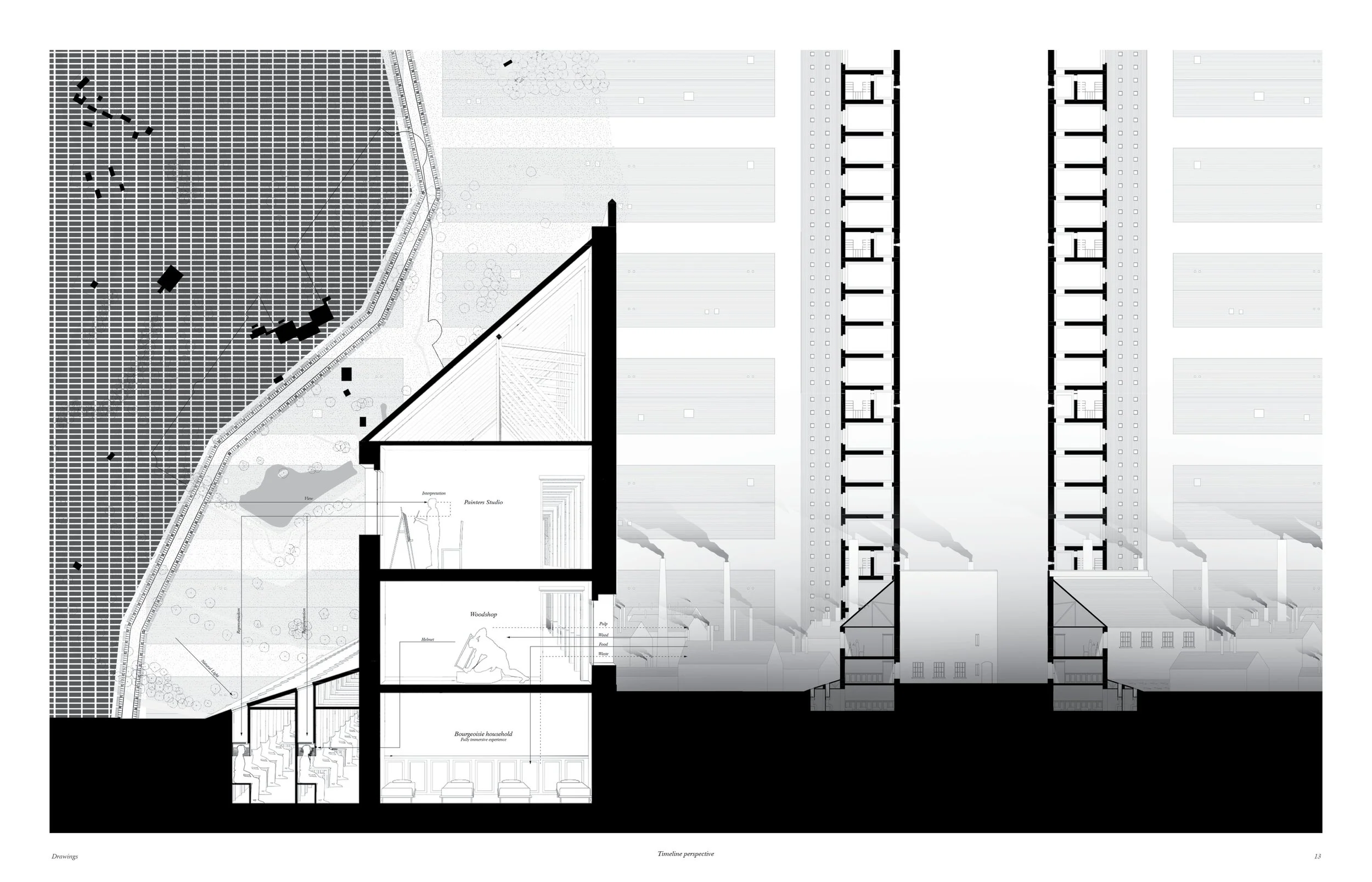
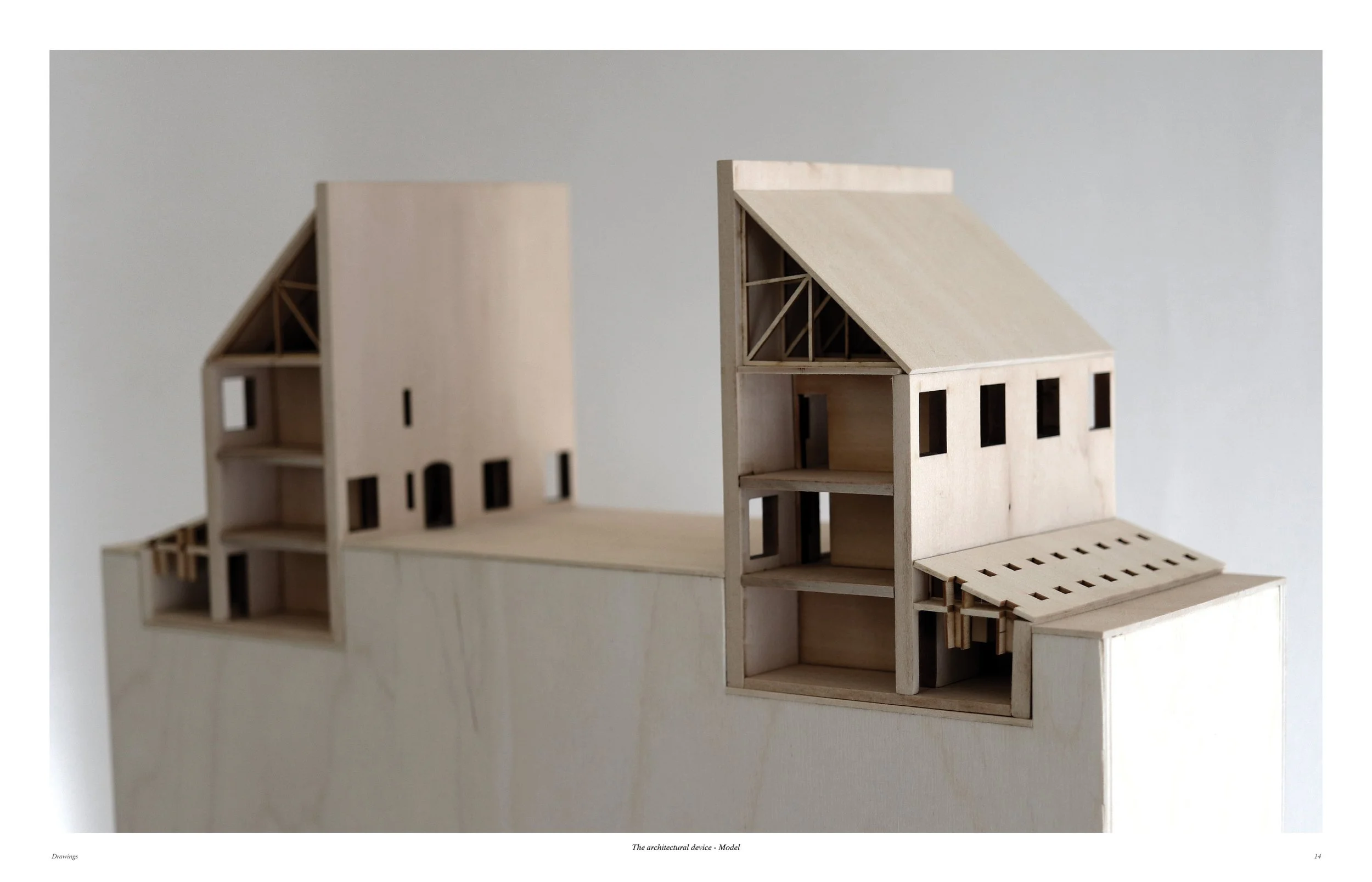
Beyond the personal immersion, this device is expanded into a collective architectural scale. Imagine a three-floor building. The helmet is worn in the basement, a below ground bourgeoisie household which creates a fully immersive experience. Light, temperature, and sound are all moderated by the mass of the earth. On the ground floor, a carpenter collects resources from a courtyard to build the helmets. The carpenter does not experience the outside world, but has a hands-on connection with nature, a physical relationship with something real. On the floor above, a landscape architect sees the world from a distance through a window. Here, the exterior is replicated in a representation, but not experienced. Their paintings of the outside create the virtual world for the helmet. As this layered architectural machine expands with new users, the world outside transforms into a land of production in order to sustain the users of the virtual world.
The fiction
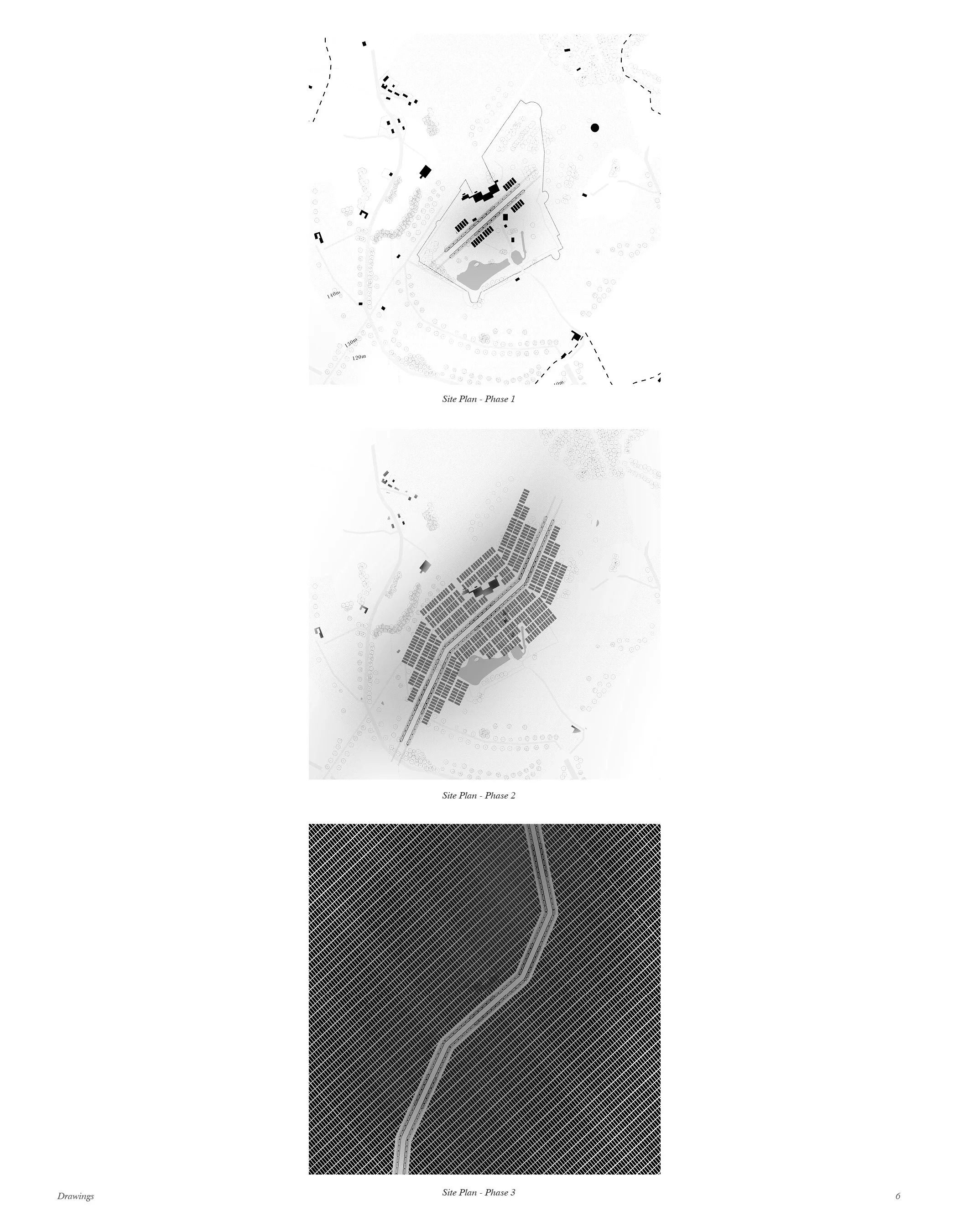
The ideal setting to deploy this device is Stowe Park in Buckinghamshire, England, which was described by Pope as a perfectly picturesque landscape. We would then expect no difference at Stowe between image and reality. The virtual and physical would begin as equals, only to diverge over time. The virtual landscapes are free to improve, as the paintings loose connection from reality, based instead on the memories of the designers. These landscape architects are free. Their agency as no limits, as the images they create are a reality and the only experienced world of those immersed in the virtual. The physical need only exist to provide the resources to sustain the architectural device. This project illustrates the degradation of the physical world which corresponds to improvements in virtual landscapes.
This projects illustration of an individualized device to immerse oneself in virtual landscapes, and a corresponding architectural device to support the production of virtual worlds, prompts reflections on the difference between direct or mediated experiences of landscapes.